

JEE Advanced 2026 | Check Exam Dates, Schedule, Complete Guide
The JEE Advanced 2026 exam is scheduled for Sunday, May 17, 2026, by IIT Roorkee. Every year, lakhs of JEE aspirants compete to get into the top IITs of India, where the selection rate is approximately 9-12%. If you are also part of this crowd, students should note that registration for IIT JEE Advanced 2026 starts on April 23, 2026, and closes on May 2, 2026. At Matrix JEE Academy, our students have consistently produced top ranks in JEE Advanced by beating those odds, where 1219+ students qualified for JEE Advanced in 2025 alone, including 670+ IIT selections and Mayank Soni achieving AIR 26 in 2023.
If you have cleared JEE Main 2026, you become eligible for the JEE Advanced 2026 exam. This guide covers everything a student needs to know about the JEE Advanced exam. Check important dates of JEE Advanced 2026 registration, eligibility criteria, the complete syllabus, chapter-wise weightage, previous year papers, a detailed JEE Advanced 2026 preparation strategy by Matrix Academy experts, JoSAA counselling 2026, and what’s next after results.

JEE Advanced 2026 Latest Updates & Highlights
IIT Roorkee will be conducting the JEE Advanced 2026 exam this year. All the latest updates and information regarding the JEE Advanced 2026 exam will be updated here. As per the last update, below is the important information students should know:
- The JEE Advanced 2026 registrations will start from April 23, 2026, at 10:00 AM to May 2, 2026.
- The JEE Advanced 2026 registrations for foreign nationals started from April 6, 2026.
- The JEE Advanced 2026 exam date is May 17, 2026.
What is the JEE Advanced Exam?
The JEE Advanced is a national-level engineering exam conducted once every year to get admission to IITs. The exam is conducted under the guidance of JAB (Joint Admission Board). The JEE Advanced exam is conducted by the IITs on a rotational basis, with one IIT conducting it each year. In 2026, IIT Roorkee will be conducting the JEE Advanced 2026 exam on May 17, 2026. The exam will consist of two compulsory papers, which are Paper 1 and Paper 2. Both papers will be conducted on the same day, and the time duration of each paper is 3 hours.

For 2026, there are a total of 33 participating institutes, including 23 IITs. Other than IITs, the other participating institutes are IISc Bangalore, IISERs (5), IIST (Indian Institute of Space Science and Technology), RGIPT (Rajiv Gandhi Institute of Petroleum Technology), and IIPE (Indian Institute of Petroleum & Energy). Students who fulfil all the eligibility criteria and clear the JEE Advanced exam will be eligible for admission to the Bachelor’s, Integrated Master’s, and Dual Degree programmes at IITs. In 2026, there are approximately 17,385 seats available at IITs.
JEE Advanced 2026 Exam Schedule:
| JEE Advanced 2026 Exam – May 17, 2026 (Sunday) | |
| Paper 1 | 09:00 IST to 12:00 IST (9 AM – 12 PM) |
| Paper 2 | 14:30 IST to 17:30 IST (2:30 PM – 5:30 PM) |
JEE Advanced 2026 Important Dates
The table below includes all the important dates of the JEE Advanced 2026 exam. Stay updated with the latest events and dates so that you do not miss out on any important information. The dates are tentative based on past years’ trends. The official dates will be updated soon.
| Event | Date |
| JEE Advanced 2026 Registration Start Date | April 23, 2026 (10:00 AM) |
| Registration Last Date | May 2, 2026 (11:59 PM) |
| Last Date for Fee Payment | May 4, 2026 |
| Admit Card Release | May 11 – May 17, 2026 |
| JEE Advanced 2026 Exam Date | May 17, 2026 (Sunday) |
| Paper 1 Timing | 9:00 AM – 12:00 PM |
| Paper 2 Timing | 2:30 PM – 5:30 PM |
| Response Sheet Release | May 21, 2026 (Expected) |
| Provisional Answer Key | May 2026 (Last Week) |
| Final Answer Key & Result | June 1, 2026 (Expected) |
JEE Advanced 2026 Registration Process
The registration forms for the JEE Advanced 2026 exam will open from April 23, 2026 (10:00 IST) and end on May 2, 2026 (23:59 IST). The registration will be done online on the official website https://jeeadv.ac.in/. The last date for fee payment for registered candidates is May 4, 2026 (23:59 IST). The JEE Main 2026 result will be declared on April 23, 2026, and the top 2,50,000 candidates can start applying for JEE Advanced. Below is the complete JEE Advanced 2026 registration process along with fee details for a better picture:
- Visit the official JEE Advanced website.
- Log in using the JEE Main 2026 roll number and password. Enter the security pin or captcha.
- Next, you will be required to create a new password for registration. Click submit to register after verifying your JEE Main details.
- Once registered, students will have to fill in the required personal information.
- Choose the number of attempts accurately.
- Enter your preferred exam cities. Students can choose any 3 cities from the given list.
- Choose the preferred language to give the exam. Students who will require a scribe can choose the correct scribe status.
- Now, review all the information entered before submitting and make any edits required.
- The next important step is to upload all the documents asked in the correct size and format.
- Pay the total fee after completing all the steps through a debit card/credit card/UPI/online banking, or offline payment can also be done.
- Students will receive mail and SMS once the payment is confirmed and the application form is filled out. Download the confirmation page for future use.
JEE Advanced 2026 Registration Fee Details
Students will have to pay a registration fee while filling out the JEE Advanced 2026 application form. The total fee amount differs for students from different categories and genders. Here are the fee details that students need to know based on category, gender and foreign nationals.
| Exam Centre Location | Candidate Type | Category / Details | Fee |
| India | Indian Nationals | Female (All Categories) | ₹ 1600 |
| SC / ST / PwD | ₹ 1600 | ||
| All Other Candidates | ₹ 3200 | ||
| OCI/PIO (I) | Female (GEN & GEN-PwD) | ₹ 1600 | |
| OPEN (GEN-PwD) | ₹ 1600 | ||
| OPEN (GEN) | ₹ 3200 | ||
| Foreign Nationals & OCI/PIO (F) | SAARC Countries | USD 100* | |
| Non-SAARC Countries | USD 200* | ||
| Foreign Countries | Indian Nationals & OCI/PIO (I) | All Candidates | USD 200* |
| Foreign Nationals & OCI/PIO (F) | SAARC Countries | USD 200* | |
| Non-SAARC Countries | USD 300* |
Important Documents for JEE Advanced 2026 Registration
Uploading the right document is the most important step while registering and filling out the JEE Advanced form. The documents are supposed to be submitted in the correct file size and format; only then will they be considered. Students should note that the category and caste certificates must be updated based on the current financial year.
| Category | Documents Required |
| All Candidates | • Class X certificate (for Date of Birth) or Birth Certificate • Class XII (or equivalent) certificate/marksheet (2025 or 2026 appearing/passed candidates) • Gazette notification (if name differs from Class X certificate) |
| GEN-EWS Candidates | GEN-EWS Certificate (issued on or after April 1, 2026) |
| OBC-NCL Candidates | OBC-NCL Certificate (issued on or after April 1, 2026) • Declaration instead of certificate (if not available at registration time) |
| SC/ST Candidates | SC/ST Certificate (as per Government of India guidelines) • Declaration (if certificate not available during registration) |
| PwD Candidates | UDID Certificate or PwD Certificate (FORM-PwD II/III/IV) • For Dyslexia: FORM-DYSLEXIC-1 & FORM-DYSLEXIC-2 (must mention “SEVERE”) |
| DS Category Candidates | Certificate (FORM-DS) issued by Armed Forces record offices |
| Candidates with Foreign/Unlisted Boards | Equivalence Certificate from the Association of Indian Universities (AIU) |
| Foreign / OCI / PIO Candidates | Must follow specific instructions available on the official JEE Advanced website |
JEE Advanced Eligibility Criteria 2026
Want to appear for the JEE Advanced exam? Find out if you meet all the eligibility criteria set by officials for the JEE Advanced 2026 exam. The eligibility criteria differ for foreign nationals. Foreign nationals and OCI/PIO can directly register for the JEE Advanced exam without meeting the JEE Main exam criteria only on the condition that they meet other eligibility terms. Check the detailed JEE Advanced eligibility criteria for Indian nationals:
JEE Main 2026 Based Criteria
Students will have to clear the JEE Main 2026 exam (B.E./B.Tech) and be in the top 2,50,000 qualified candidates to be eligible for JEE Advanced. There are category-wise reservations followed during the shortlisting of the JEE Main qualified candidates. The table below showcases the exact reservation criteria followed:
| Sl No. | Category | Number of “Top” Candidates |
| 1 | OPEN | 96,187 |
| 2 | OPEN-PwD | 5,063 |
| Total OPEN | 1,01,250 | |
| 3 | GEN-EWS | 23,750 |
| 4 | GEN-EWS-PwD | 1,250 |
| Total GEN-EWS | 25,000 | |
| 5 | OBC-NCL | 64,125 |
| 6 | OBC-NCL-PwD | 3,375 |
| Total OBC-NCL | 67,500 | |
| 7 | SC | 35,625 |
| 8 | SC-PwD | 1,875 |
| Total SC | 37,500 | |
| 9 | ST | 17,812 |
| 10 | ST-PwD | 938 |
| Total ST | 18,750 |
NOTE: The reservation criteria are only applicable for Indian nationals, excluding OCI/PIO and foreign nationals.
Age Limit Criteria
Candidates who are born on or after October 1, 2001, are eligible for the JEE Advanced 2026 exam. There is five years age relaxation provided to SC, ST, and PwD candidates, which means that these candidates should have been born on or after October 1, 1996.
Number of Attempts Criteria
A candidate can attempt or sit for the JEE Advanced exam only 2 times for two consecutive years.
Class 12 Examination Criteria
A candidate is eligible for JEE Advanced 2026 if they have appeared for the Class 12 examination for the first time in 2025 or 2026. And students should have the following mandatory subjects in Class 12 – Physics, Chemistry and Mathematics.
- Candidates who appeared for the Class 12 examination for the first time in 2024 or before that are not eligible for the JEE Advanced 2026 exam.
- There is an exception in this case – a candidate is eligible for JEE Advanced if they appeared for the class 12 exam in the 2023-2024 academic year and the result was declared on or after June 18, 2024. They should also meet other eligibility requirements.
Earlier Admission in IITs
A candidate who has been admitted to any of the IITs before under any academic programme (listed in JoSAA Business Rules 2025) is not eligible to get admission again. Even if the candidate decided to continue and discontinue later, or accepted the seat by reporting online or at the reporting centre. If the admission was cancelled for any reason after joining any IIT, such candidates are also not eligible for JEE Advanced. Below is the exception:
- Candidates who were admitted to the IIT preparatory course for the first time in 2025 are eligible.
- If you were allotted an IIT seat during JoSAA counselling but did not report online or withdrew before the last round, you are eligible.
- If your seat was cancelled for any reason before the last round of JoSAA, you are eligible for JEE Advanced 2026.
Tips to Become Eligible for JEE Advanced
JEE Advanced is the only pathway to getting into the prestigious IITs of India. Hence, not everyone is eligible to give the JEE Advanced exam and which is why we educate our students beforehand on how to become eligible for JEE Advanced. Here’s what our Matrix faculty consistently advises:
- Aim for a strong JEE Main rank – To give JEE Advanced exam, students are supposed to be in the top 2,50,000 candidates. Hence, aim to get a higher rank and prepare accordingly to be on the safe side.
- Don’t neglect Class 12 boards – To get admission into IITs, one of the biggest criteria is to have a minimum of 75% marks in Class 12th. Hence, students are prepared for competitive exams at Matrix, but board exams are given equal attention.
- Treat every attempt seriously – Students do not have many chances but only two across two consecutive years to give and clear the JEE Advanced exam.
- Get your documents in order early – many students get their JEE Advanced application disqualified due to uploading the wrong documents. Category certificates and marksheets must be current before registration opens.
JEE Advanced Exam Pattern 2026
Understanding the exam pattern of JEE Advanced 2026 is essential for effective preparation. The exam is conducted in two compulsory papers (Paper 1 and Paper 2), both of which candidates must attempt on the same day. Each paper tests students on Physics, Chemistry, and Mathematics, with a focus on conceptual understanding, analytical skills, and problem-solving ability.
Unlike JEE Main, the question pattern in JEE Advanced can vary every year, making it important for students to be prepared for multiple types of questions, such as MCQs, numerical-based ones, and match-the-following.
- Both Paper 1 and Paper 2 are equally important and must be attempted.
- The marking scheme is dynamic, meaning it can change each year.
- Questions often test deep conceptual clarity rather than rote learning.
- Partial marking is awarded in some questions, but negative marking may also apply.
| Particulars | Details |
| Mode of Examination | Computer-Based Test (CBT) |
| Number of Papers | 2 (Paper 1 & Paper 2) |
| Duration | 3 hours each (4 hours for PwD candidates) |
| Subjects | Physics, Chemistry, Mathematics |
| Question Types | MCQs, Numerical Value, Match the Following, Multiple Correct |
| Marking Scheme | Varies (includes partial marking and negative marking) |
| Language | English and Hindi |
| Compulsory Papers | Yes, both papers are mandatory |
| Total Marks | Varies every year |
JEE Advanced Complete Syllabus 2026
The JEE Advanced 2026 syllabus includes Physics, Chemistry, and Mathematics topics, but at an advanced level. The syllabus for 2026 stays the same as 2025, and there were no such significant changes noticed. The topics and chapters cover both class 11 and 12 syllabus based on the NCERT frameworks. The syllabus is designed in a way that it tests the conceptual understanding of the concepts in depth and the ability to solve multi-concept problems.
Physics Syllabus for JEE Advanced 2026
Below is the Physics syllabus of JEE Advanced 2026 with units and topics that will be covered in that particular unit.
| Unit | Topics Covered |
| Mechanics | Laws of motion, kinematics, work, energy & power, rotational motion, gravitation |
| Thermodynamics & KTG | Heat & temperature, laws of thermodynamics, kinetic theory of gases |
| Electrodynamics | Electrostatics, current electricity, magnetism, electromagnetic induction, alternating current |
| Optics | Ray optics, wave optics |
| Modern Physics | Photoelectric effect, atomic models, nuclear Physics, semiconductors |
Chemistry Syllabus for JEE Advanced 2026
Check the Chemistry syllabus of the JEE Advanced 2026 with units and topics covered in the table below:
| Unit | Topics Covered |
| Physical Chemistry | Mole concept, atomic structure, chemical bonding, thermodynamics, equilibrium, electroChemistry, chemical kinetics |
| Organic Chemistry | General organic Chemistry (GOC), hydrocarbons, haloalkanes, alcohols, aldehydes, ketones, carboxylic acids, biomolecules, polymers |
| Inorganic Chemistry | Periodic table, coordination compounds, p-block, d-block, metallurgy, qualitative analysis |
Mathematics Syllabus for JEE Advanced 2026
Here is the Mathematics syllabus of JEE Advanced 2026 that students can refer to, including units and topics covered in the table below:
| Unit | Topics Covered |
| Algebra | Quadratic equations, sequences & series, permutations & combinations, binomial theorem, matrices & determinants, complex numbers |
| Calculus | Limits, continuity, differentiability, application of derivatives, integration, differential equations |
| Coordinate Geometry | Straight lines, circles, parabolas, ellipses, hyperbola |
| Trigonometry | Trigonometric identities, equations, and inverse trigonometric functions |
| Vectors & 3D Geometry | Vector algebra, direction cosines, planes, lines in space |
JEE Advanced 2026 Chapter-Wise Weightage
For an effective JEE Advanced preparation strategy, the most crucial part is to understand the chapter-wise weightage and prepare accordingly. Students are advised to prioritise the high-weightage topics and solve multi-concept problems in them regularly. There is no definite blueprint of chapter-wise weightage, but based on the past trends, here is the estimated data prepared by our Matrix JEE experts.
Mathematics Chapter-Wise Weightage for JEE Advanced 2026
Here is the Mathematics chapter-wise breakdown of all chapters. High-weightage chapters are functions, vectors, 3D geometry, definite integration, complex numbers, probability and matrices & determinants. These chapters dominate 50% of the Mathematics section.
| Chapter / Topic | Weightage (%) | Importance |
| Functions | 9% | Very High |
| Vectors & 3D Geometry | 10% | Very High |
| Definite Integration | 6–7% | High |
| Complex Numbers | 6–7% | High |
| Probability | 5–6% | High |
| Matrices & Determinants | 5–6% | High |
| Area Under Curve | 5–6% | Medium |
| Application of Derivatives | 5–6% | Medium |
| Sequence & Series | 3–4% | Medium |
| Trigonometry | 3–4% | Medium |
| Limits & Continuity | 3–4% | Low |
Physics Chapter-Wise Weightage for JEE Advanced 2026
Below is the Physics chapter-wise weightage of all chapters and units. The high-priority chapters that students should focus on are Heat & Thermodynamics, Electrostatics, Modern Physics, Waves & Topics. These topics dominate the section, with 46% of questions coming from these chapters.
| Chapter / Topic | Weightage (%) | Importance |
| Heat & Thermodynamics | 13% | Very High |
| Electrostatics | 12.5% | Very High |
| Modern Physics | 10% | High |
| Waves & Optics (Wave Optics) | 6–7% | High |
| Error & Measurement | 6–7% | Medium |
| EMI & AC | 5–6% | Medium |
| Gravitation | 5–6% | Medium |
| SHM & Waves | 5% | Medium |
| Kinematics | 3% | Low |
| NLM | 3% | Low |
| Magnetism | 3% | Low |
| Geometrical Optics | 3% | Low |
Chemistry Chapter-Wise Weightage for JEE Advanced 2026
The Chemistry section comprises high-weightage chapters: carboxylic acids & derivatives, p-block elements, chemical bonding, coordination compounds, electrochemistry, and ionic equilibrium.
| Chapter / Topic | Weightage (%) | Importance |
| Carboxylic Acids & Derivatives | 9% | Very High |
| p-Block Elements | 8% | Very High |
| Chemical Bonding | 6–7% | High |
| Coordination Compounds | 5–6% | High |
| ElectroChemistry | 6–7% | High |
| Ionic Equilibrium | 6–7% | High |
| Polymer & Practical Organic Chemistry | 6–7% | Medium |
| Salt Analysis | 5–6% | Medium |
| Thermodynamics | 3–4% | Medium |
| Chemical Kinetics | 3–4% | Medium |
| Gaseous State / Solutions | 3–4% | Low |
Matrix Academy Strategy for JEE Advanced Preparation
Preparing for JEE Advanced requires more than just covering the syllabus. The JEE Advanced exam is designed in a way to test a student’s deep conceptual clarity, smart practice, and the right exam temperament. At Matrix JEE Academy, the preparation strategy is designed around how the exam actually tests students.
Concept-Focused Learning
Unlike traditional coaching methods that treat subjects in isolation, Matrix focuses on interlinking concepts across Physics, Chemistry, and Mathematics. JEE Advanced consistently sets questions where two or three concepts overlap in a single problem — for example, a question combining thermodynamic cycles with mathematical integration, or one linking electrochemistry with ionic equilibrium. Our faculty designs every classroom session around these intersections, so students are never caught off guard by a multi-concept problem on exam day.
Focus on High-Weightage & High-Impact Chapters
Not all chapters carry equal weight in JEE Advanced, and preparing without this awareness is one of the most common mistakes students make. Matrix faculty prioritises chapters like Heat and Thermodynamics (13% weightage in Physics), Electrostatics (12.5%), Vectors and 3D Geometry (10% in Maths), and Carboxylic Acids and Derivatives (9% in Chemistry). Rather than surface-level coverage, the emphasis is on complete mastery — training students to handle the most complex and layered versions of problems from these chapters, since that is exactly where ranks are decided.
PYQ-Driven Preparation Approach
At Matrix, previous year questions are treated as the single most reliable blueprint for JEE Advanced preparation. Students don’t just solve PYQs once and move on — they revisit them multiple times, map conceptual patterns across years, and study examiner intent behind each question type. This approach helps students understand which topics the paper-setter consistently returns to, how difficulty levels shift year to year, and what kind of thinking a high-scoring response demands. PYQs from the last 10 years are deeply integrated into every subject module at Matrix.
Advanced Mock Testing & Deep Analysis
At Matrix, a mock test is not a performance event — it is a diagnostic tool. For every mock test a student writes, they are required to spend at least double that time in structured analysis. This means identifying every mark lost, categorising each loss as a conceptual gap, a calculation error, or a time management mistake, and then addressing it with targeted practice before the next test. This test-analysis loop is one of the most significant contributors to rank improvement among Matrix students, because it ensures that the same mistake is never repeated.
Personalised Performance Tracking
Every student at Matrix is tracked at a subtopic level across all tests and classroom assessments. If a student consistently drops marks in Rotational Mechanics, they receive a targeted problem set for that specific area — not a repeat of the entire Mechanics chapter. If a student struggles with Coordination Chemistry numericals versus theory questions, that distinction is identified and addressed separately. This level of granularity in performance tracking means no student spends time re-covering what they already know, and no weakness goes unaddressed.
Structured Revision System
One of the most common reasons capable students underperform at JEE Advanced is poor revision planning. At Matrix, revision is not left to the student to figure out independently — it is built into the academic schedule. Regular topic-wise tests create natural revision cycles. High-weightage chapters are revisited through spaced repetition at increasing intervals. Weak areas identified in mocks are reinforced through dedicated revision sessions.
Building the Right Attempt Strategy
JEE Advanced rewards students who walk in with a clear plan. At Matrix, students are trained to develop a personalised subject-wise attempt order based on their own accuracy data and time-per-question averages from mock tests. For example, a student with high Chemistry accuracy and average Physics speed will approach the paper differently from one with strong Mathematics instincts.
Exam Temperament & Accuracy Training
JEE Advanced is as much a test of mental control as it is of academic ability. The negative marking structure means that a student with 85% accuracy and 60 attempts will outscore a student with 70% accuracy and 80 attempts — every time. Matrix trains students specifically for this reality. Timed practice sessions with strict accuracy targets, deliberate question-selection drills, and high-pressure mock conditions are all designed to build the composure and decision-making ability that separates good students from great ranks.
JEE Advanced Previous Year Question Papers
PYQs are the most important element of JEE Advanced preparation. Solving PYQs just as solved examples or even as mocks helps in understanding the unpredictable nature of the JEE Advanced exam. It is the best way to test where you stand and analyse the gaps in your preparation level. Download subject-wise and paper-wise PDFs for JEE Advanced 2025 and 2024 below.
JEE Advanced 2025 Question Papers (Paper 1 & Paper 2)
| Paper | Physics PDF | Chemistry PDF | Mathematics PDF |
| Paper 1 | Download PDF | Download PDF | Download PDF |
| Paper 2 | Download PDF | Download PDF | Download PDF |
JEE Advanced 2024 Question Papers (Paper 1 & Paper 2)
| Paper | Physics PDF | Chemistry PDF | Mathematics PDF |
| Paper 1 | Download PDF | Download PDF | Download PDF |
| Paper 2 | Download PDF | Download PDF | Download PDF |
JEE Advanced 2026 Admit Card
The expected date for the JEE Advanced 2026 admit card to be released is between May 11, 2026, and May 17, 2026. Students who have successfully registered for JEE Advanced 2026 within the registration window will receive their admit cards positively. The JEE Advanced 2026 admit card will be released on the official website itself, where students will have to log in to download it.
Students can find the following details in their admit card: name, roll number for JEE (Advanced) 2026, JEE (Main) application number, photograph, signature, date of birth, address for correspondence and category. Students are supposed to carry the admit card along with them to the exam centre.
JEE Advanced Result 2026
The JEE Advanced Result 2026 is the final deciding factor on if a student will be eligible for an IIT or not. Hence, the result is one of the most crucial milestones for engineering. The result will also determine which branch and IIT the student has higher chances of getting into based on their All India Rank (AIR), qualifying status, and eligibility for participation in the JoSAA counselling process.
The JEE Advanced 2026 result is expected to be declared in the first week of June 2026 on the official website of JEE Advanced. Candidates will be able to check the result using their JEE Advanced 2026 roll number, date of birth, and registered mobile number/email ID. The following details will be available on the scorecard:
- Candidate’s name and roll number
- Marks obtained in Paper 1 and Paper 2
- Total aggregate marks
- All India Rank (AIR)
- Category rank (if applicable)
- Qualifying status
JEE Advanced Cutoff 2026
The expected cutoff for 2026 is different for each category and includes both subject-wise and aggregate criteria. Candidates must meet both conditions to be included in the rank list.
The JEE Advanced cutoff changes every year depending on various factors, including the difficulty level of the exam, the number of candidates and overall performance. The table here represents the expected JEE Advanced 2026 category-wise:
| Category | Minimum % in Each Subject | Minimum Aggregate % |
| General (CRL) | 5.83% | 20.56% |
| OBC-NCL | 5.25% | 18.50% |
| GEN-EWS | 5.25% | 18.50% |
| SC | 2.92% | 10.28% |
| ST | 2.92% | 10.28% |
| PwD (All Categories) | 2.92% | 10.28% |
| Preparatory Course | 1.46% | 5.14% |
JoSAA Counselling 2026 and Seat Allotment Process
After the JEE Advanced 2026 results, students will have to sit for JoSAA counselling to get admission into IITs through JEE Advanced. Hence, qualified candidates must participate in the JoSAA (Joint Seat Allocation Authority) counselling, and the process is completely online. The seat allotment will happen based on rank, preferences, and seat availability. JoSAA counselling 2026 is expected to be conducted in the first week of June 2026. Below are the steps on how to register for JoSAA counselling and what the process is:
- Registration & Choice Filling
The first step is to register on the JoSAA portal. Students will have to register within the deadline and fill in their preferred institutes and branches in order of priority. - Choice Locking
The next important step is to fill out the choice form and finalise your choices in priority order of the colleges you want to opt for. - Seat Allotment Round
Based on the college choices filled in the form, seats will be allotted in 6 rounds of JoSAA counselling based on JEE Advanced AIR rank, category, and preferences. - Accepting the Seat
In every JoSAA round, students will have to choose one of the options: Freeze (accept and stop further rounds); Float (accept but look for better options); Slide (accept institute and upgrade branch) - Document Verification
Once the college seat is accepted, students will have to upload the required documents for online verification. - Seat Confirmation Fee Payment
The admission seat will be confirmed only when students pay the admission fee, which is the PAF (Partial Admission Fee).
What to Do After JEE Advanced 2026 Result? Matrix Academy Expert Tips
Clearing JEE Advanced is a milestone, but what comes immediately after the result is equally important. Many students lose valuable IIT seats simply because they are unprepared for the decisions the post-result process demands. Here is what you need to know.
Understanding Your AIR and What It Means Practically
Your All India Rank determines which IITs and branches are realistically accessible to you. As a general reference based on past years’ trends:
- AIR under 500: Top IITs (Bombay, Delhi, Madras, Kharagpur) with premium branches like Computer Science, Electrical, and Engineering Physics.
- AIR 500–2,000: Good IITs with strong branches. CS may still be accessible at newer IITs.
- AIR 2,000–5,000: Mid-tier IITs with a strong range of branches across engineering disciplines.
- AIR 5,000–10,000: Newer IITs and some branches at established ones. NITs via JEE Main rank become a strong parallel option.
- AIR above 10,000: Focus shifts to NITs, IIITs, and GFTIs through JoSAA using your JEE Main rank.
IIT vs NIT — How to Think About the Choice
A common dilemma after results is whether to take a lower-priority branch at a top IIT or a preferred branch at a top NIT. Our Matrix faculty advises students to weigh three factors: the reputation of the specific department (not just the institution), placement data for that branch, and the student’s genuine interest in the subject. A student who is passionate about Civil Engineering will do better at IIT Roorkee’s Civil department than at IIT Bombay’s less preferred branch — both in terms of learning and career outcomes.
Branch Selection Strategy During JoSAA
During JoSAA counselling, students often make the mistake of filling choices randomly or purely by institution rank. The smarter approach is to research branch-specific placement records, average and median salaries, and alumni networks before locking in choices. Use the Float option strategically in early rounds to keep better options open rather than freezing too early. Only lock your final choice when you are genuinely satisfied with the combination of the institute and the branch.
If You Don’t Qualify — What Next
Not clearing JEE Advanced does not close the door on a strong engineering career. Students with a good JEE Main rank can access top NITs, IIITs, and GFTIs through JoSAA. BITSAT, VITEEE, and MET are strong private university options with excellent placements. A second attempt at JEE Advanced is available if you meet the eligibility criteria — and many Matrix students have improved their rank significantly in their second attempt with targeted preparation.
Best Books for JEE Advanced 2026
For JEE Advanced preparation, it’s important to have clarity on which resources to study from and keep only limited resources to avoid confusion. Students are advised to focus on quality over quantity. Based on our Matrix JEE experts, here are the most reliable and trustworthy JEE Advanced resources that students can refer to. These books are enough to build concepts and master advanced problem-solving without overwhelming yourself.
Best Mathematics Books for JEE Advanced 2026
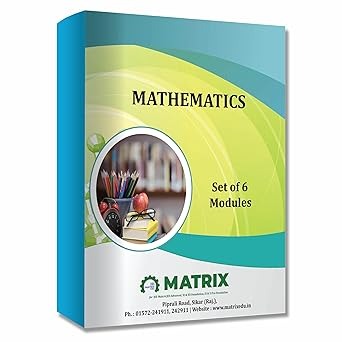
The Matrix JEE Mathematics module and the Cengage Maths series are the top 2 books recommended by toppers and experts for JEE Advanced maths. Students can also refer to Problems Plus in IIT Mathematics (Asit Das Gupta) and Advanced Problems in Mathematics for JEE (Vikas Gupta & Pankaj Joshi).

Best Chemistry Books for JEE Advanced 2026
NCERT Class 11 and 12 books are the best choice for JEE Advanced Chemistry to get a thorough understanding of the basics. Students can refer to the Matrix JEE Chemistry book set as well for advanced-level practice questions and a complete, all-in-one guide.


Best Physics Books for JEE Advanced 2026
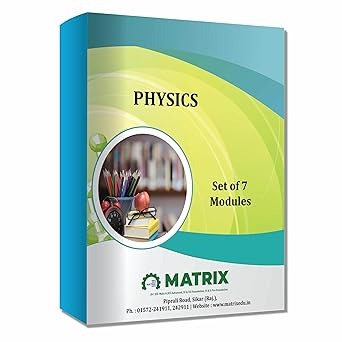
For JEE Advanced Physics, the top recommended books are HC Verma and the Matrix JEE Academy Physics module set. Students can also refer to Problems in General Physics by I.E. Irodov for high-level numericals, and DC Pandey Physics series for extensive practice.
Concept of Physics by H.C Verma

Matrix Academy JEE Advanced 2026 Result Trends (2020-2025)
Over the years, Matrix JEE Academy has consistently delivered strong results in JEE Advanced, reflecting its structured and result-oriented preparation approach. The steady rise in selections highlights the academy’s focus on conceptual clarity, rigorous testing, and personalised mentoring.

The table below showcases the year-wise performance trend of Matrix students from 2020 to 2025.
| Year | Students Qualified | Key Highlights |
| 2025 | 1219+ | Highest-ever selections: 670+ students secured admissions in IITs, and 1287 students secured admissions into NITs/IIITs |
| 2024 | 820+ | Record-breaking result: 14 students under AIR 2000; 600+ students got IIT seats, and 900+ students got into NITs/IIITs |
| 2023 | 523+ | Mayank Soni (AIR 26); 290+ IIT selections |
| 2022 | 434+ | 210+ IIT selections |
| 2021 | 410+ | Consistent performance trend maintained |
| 2020 | 425+ | 210+ IIT selections |
Conclusion
IIT Roorkee scheduled the JEE Advanced 2026 exam on May 17, 2026 (Sunday), and the registration window for the exam is April 23, 2026, to May 2, 2026. Students are advised to follow the official JEE Advanced website to avoid any important deadlines. Students who are willing to sit for JEE Advanced 2026 should go through the eligibility criteria thoroughly. Refer to the JEE Advanced preparation guide and books to improve your score. Increase your chances of getting into IITs by solving PYQs regularly and consistently analysing your performance.
FAQs
Students can start applying for the JEE Advanced 2026 exam from April 23, 2026. After registration, students are supposed to fill out the entire application form and pay the registration fees to confirm their application.
The JEE Advanced 2026 exam will be conducted by IIT Roorkee this year based on the yearly routine rotational policy. IIT Roorkee will be conducting the exam and will set the paper as well.
The last date of JEE Advanced 2026 registration is May 2, 2026. Students are advised to apply within the registration window and before the deadline to be eligible to sit for the JEE Advanced exam.
The JEE Advanced 2026 result date is expected to be in the first week of June 2026. The result will be released on the JEE Advanced official website along with the answer key.
Candidates must qualify for JEE Main 2026 and be among the top 2,50,000 candidates. In addition, they must meet the age limit, attempt limit, and Class 12 eligibility criteria. Students should have studied Physics, Chemistry, and Mathematics in Class 12. All eligibility conditions must be satisfied to appear for the exam.
A candidate can attempt JEE Advanced a maximum of 2 times in two consecutive years. These attempts must be taken without any gap year in between. Once both attempts are used, no further chances are given. This rule applies to all categories.
Yes, students must attempt both Paper 1 and Paper 2. Each paper tests Physics, Chemistry, and Mathematics. If a candidate skips any one paper, their result will not be considered. The final ranking is based on combined performance in both papers.
The JEE Advanced 2026 cutoff includes a qualifying cutoff (minimum marks to get a rank) and an admission cutoff (rank required for IIT seats). The qualifying cutoff is expected to be around 20.56% for the general category, with lower cutoffs for reserved categories. Admission to IITs depends on your AIR, with top branches requiring ranks under 100–500, while lower branches may go beyond 10,000 ranks.