

JEE Main Preparation Strategy 2026 | Study Plan, Tips, Expert Guidance
Scoring 99 percentile in JEE Main 2026 directly depends on the right preparation strategy. Studying blindly for long hours is not fruitful, and strategising the study hours is crucial to get the desired outcome. The key elements of a well-defined JEE Main preparation strategy include mastering the high-weightage chapters, smart revision, solving PYQs, doing mock test analysis and daily practice questions.
In this blog, students will find a complete roadmap for JEE Main 2026 preparation. You will also find a reliable study plan (month-wise) for both JEE Main Session 1 and 2, smart revision tips, high-priority chapters to study, mock tests scehdule and tips from JEE experts. The JEE Main preparation strategies shared will help aspirants ace the JEE Main 2026 exams and boost the possibility of scoring 99+ percentile.

Strategy to Score 99 Percentile in JEE Main
To score 99 percentile, students should focus on clarity and a structured study approach rather than plain hard work. Matrix JEE Academy has been consistently producing top rankers every year. In 2025, 279+ students cleared the JEE Main exam, among whom Gaurav Pareek (99.9888%ile, AIR 238) topped. Follow these proven strategies and tips to crack JEE Main that successfully helped Matrix students walk the path of being a JEE Main topper:
- Attempt strategy (accuracy): Exam attempt strategy is a key point in JEE Main. Make a strategy for yourself. Do not focus on attempting all the questions. Rather, focus on attempting 50-60% of the paper but with 90% accuracy.
- Master NCERT: Revise NCERT as much as possible, especially for chemistry. This alone will be enough to score high in the chemistry section.
- Focus on high-weightage chapters: Make a list of all the high-weightage chapters with the question frequency. Prioritise these chapters, which contribute almost 70% of the complete JEE Main paper.
- Importance of PYQs: Try to solve and analyse 10-15 years of JEE Main PYQs. Figure out the type of questions and concepts that repeat frequently and note them down.
- Mock tests: Mock tests can make or break the entire JEE Main preparation. Give full-length mock tests regularly and maintain an error log. This habit was commonly found in all Matrix toppers.
JEE Main Session 2 Preparation Tips
The JEE Main Session 1 (Paper 1) was completed on January 28, 2026. JEE Main 2026 Session 2 will be conducted from April 2, 2026, to April 9, 2026. Time is limited btu students can still improve their score and crack JEE Main in the coming 65 days. Below are the preparation strategies aspirants can follow:
- Analyse Session 1 performance: You should briefly review your weaknesses and mistakes from Session 1. Note them down and make a strategy to avoid these mistakes in Session 2.
- Improve time management: JEE Main Session 1 was found to be extremely lengthy. Students should focus on improving speed. Attempt full-length mock tests in real exam conditions, which ultimately boost your confidence to perform well in the JEE Main 2026 Session 2 exam.
- Practice application-based problems: Most of the questions in Session 1 were application-based. You can practice by visualising problems with diagrams.
- Daily revision: Revise and practice every day. This is the key to excellingin the concepts and improving score. Also, focus on multi-concept problems.

JEE Main Session 2 Study Plan
| Phase | Duration | Focus | Study Priority | Mock Plan |
|---|---|---|---|---|
| Phase 1: Analysis & Reset | 7–10 Days | Maximise score & accuracy | Error log, weak chapters, NCERT Chemistry revision | 2 full mocks + deep analysis |
| Phase 2: Strength Building | 30–35 Days | Improve weak + high-weight chapters | PYQs (10–15 yrs), speed in Maths, conceptual Physics | 2–3 mocks/week |
| Phase 3: Accuracy & Performance | Last 20–25 Days | 3 mocks/week + alternate-day mocks in the last 10 days | Full syllabus revision, formula drills, mixed practice | 3 mocks/week + alternate-day mocks in last 10 days |
JEE Main 2026 Preparation Strategy (Complete Guide)
Before starting the JEE Main preparation, getting clarity on what to study, where to study from and which chapters to focus on is utmost important. This section aims to break down the complete JEE Main preparation strategy to help serious aspirants level up their preparation. Hence, increasing their chances of scoring 99%ile in the JEE Main.
How to Set a Target Percentile for the JEE Exam?
Every JEE aspirant has a target college and a target percentile to achieve it. Before starting the preparation, students should set their target goal based on their dream college. Refer to the table below to get an idea about how many marks to target for the desired percentile. Also, find out how to calculate the percentile in JEE Main.
| Marks Range | Percentile | Session 2 Target (Realistic) |
| 280-300 | 100 | Toppers only: 260+ baseline |
| 250-279 | 99.95+ | 99.5+ from strong droppers |
| 215-249 | 99.7-99.9 | 98-99 from Class 12th |
| 190-214 | 99.4-99.7 | 97+ safety for Qualifiers |
| 170-189 | 99-99.4 | Minimum viable |
Importance of PYQs
An analysis of the past five years of JEE Main question papers shows clear patterns in difficulty level, scoring potential, and topic importance across subjects. Based on a 5-year JEE Main paper trend analysis (2021-2025), Matrix JEE faculty observed these trends:
- Mathematics: It has been observed to be the toughest and longest section.
- Physics: The physics section is of moderate difficulty. Most repeated questions have been observed from Mechanics, Modern Physics, and Current Electricity.
- Chemistry: Due to the dominance of NCERT, chemistry is observed to be the easiest-scoring section.
- Post-2024: NTA has changed the pattern since 2024. It has been observed that there is an increase in questions that are multi-concept and application-based.
| Year | Mathematics | Physics | Chemistry | Overall Difficulty | Advice for JEE Aspirants |
| 2021 | Moderate–Tough | Moderate | Easy | Moderate | Build basics + formula practice |
| 2022 | Tough & Lengthy | Moderate | Easy | Moderate | Improve Maths speed |
| 2023 | Moderate | Moderate | Easy | Easy–Moderate | Maximise Chemistry score |
| 2024 | Tough (Conceptual) | Moderate–Conceptual | Easy (NCERT) | Moderate–High | Focus on application-based PYQs |
| 2025 | Very Tough | Moderate | Easy–Moderate | High | Full mocks + accuracy training |
Topper Tips to Crack JEE Main Exam
Matrix JEE Academy students who scored in the top percentiles in recent years, they share common study strategies and principles. Such as strong fundamentals, regular revision, daily practice tests, and disciplined revision. Here are some important highlights of the JEE Main preparation strategy of toppers:
- Gaurav Pareek (AIR 238, 99.98%) – Practised 40-50 daily mocks along with NCERT revision.
- Bhavya Modi (AIR 445, 99.976%) – Eliminate silly mistakes using error logs.
- Rishabh Meel (AIR 479 Main, AIR 70 Adv) – Solve numericals using a timer.
To prepare well for the exam, you must review the Session 1 exam analysis to understand how the exam was. The paper analysis of all the shifts onthe JEE Main session 1 exam is provided below:
- JEE Main Session 1 Paper Analysis (All Shifts) (Live Now)
- JEE Main Session 1 Paper Analysis (29 January Shift 1)(Live Now)
- JEE Main Session 1 Paper Analysis (21 January Shift 1) (Live Now)
- JEE Main Session 1 Paper Analysis (21 January Shift 2) (Live Now)
- JEE Main Session 1 Paper Analysis (22 January Shift 1) (Live Now)
- JEE Main Session 1 Paper Analysis (22 January Shift 2) (Live Now)
- JEE Main Session 1 Paper Analysis (23 January Shift 1) (Live Now)
- JEE Main Session 1 Paper Analysis (23 January Shift 2) (Live Now)
- JEE Main Session 1 Paper Analysis (24 January Shift 1) (Live Now)
- JEE Main Session 1 Paper Analysis (24 January Shift 2) (Live Now)
- JEE Main Session 1 Paper Analysis (28 January Shift 1) (Live Now)
- JEE Main Session 1 Paper Analysis (28 January Shift 2) (Live Now)
Subject-Wise Strategy to Score Higher in JEE Main
Physics: Almost 70-75% of questions in the physics section are formula-based. Study JEE Main Physics like a topper by building a strong base and studying the NCERT thoroughly. Make sure to study the high-weightage chapters and practice as many daily practice papers (DPPs) and numericals as possible. Prepare JEE Main physics important formulas sheets to keep handy.
Mathematics: The majority of the maths questions are multi-concept and not directly based on formulas. Refer to the table below for High-Weightage Mathematics Chapters JEE Main. Checkout the most important maths formulas for JEE Main that every topper revises regularly.
Chemistry: The chemistry section is dominated by NCERT, with almost 80-85% of questions. Be thorough with NCERT, revise all mechanisms, formulas, and organic reactions. Practice assertion-reason and statement-based questions along with PYQs.
JEE Main Accuracy vs Attempts: Important Strategy
An overlooked important aspect to scoring in the top percentile in JEE Main is the attempt vs accuracy strategy. From research done on Matrix toppers, it was observed that 99+ percentilers attempt 65-75 questions but with 95-99% accuracy. Matrix topper Gaurav Pareek (99.98%ile, AIR 238) followed this strategy: he attempted all the sure-shot questions first and skipped the question if you cannot find a method to solve the question in your mind in under 60 seconds.
| Attempt Count | Target Accuracy | Expected Score | Percentile Range |
| 60–65 | 95–97% | 230–250 | 99.8+ |
| 65–75 | 90–93% | 210–235 | 99.5–99.8 |
| 75–85 | 85–88% | 190–215 | 99.2–99.5 |
| 85+ | <85% | 170–200 | <99 |
Smart Revision Techniques Used by 99+ Percentilers of JEE Main
To score well and crack the exam, it ultimately depends on how effectively concepts are revised and mistakes are corrected over time. Smart revision directly reflects whether you will be in the top percentiles or not. Here are some smart revision strategies used consistently by toppers:
- Block revision method: Divide the entire syllabus into 3 blocks. Revise each block by fast theory reading and solving 50-70 PYQs. Revise this block 12-15 times in 15 days.
- Flashcards: Make flashcards for formulas and reactions. Also, revise them 3 times a week.
- Error logs: Note down mistakes and topics that you keep getting incorrect in mocks and PYQs. Find ways to fix the mistakes by 90%.
- Previous Year Questions: Repeat past 15 years PYQs and focus more on high-weightage PYQs.
JEE Main Subject-Wise Chapter Weightage
The most important strategy followed by toppers is to focus on chapters that will help score high. Find chapter-wise weightage of all subjects, including Physics, maths and Chemistry. Students should focus on completing the high-weightage chapters. Toppers usually follow the Pareto principle: 20% of the JEE Main 2026 syllabus carries high weightage and accounts for 80% of the question paper.
JEE Main Physics Chapter-Wise Weightage
| Physics Section | Topic | Weightage Level | Past Year Avg. No. of Questions |
| Mechanics | Laws of Motion & Newton’s Laws | High weightage | 1–2 |
| Work, Energy & Power | High weightage | 1–2 | |
| Centre of Mass & Rotational Motion | High weightage | 1–2 | |
| Gravitation | Moderate weightage | 1 | |
| Electrodynamics | Electrostatics (Charges & Fields, Capacitors) | High weightage | 2–3 |
| Current Electricity | High weightage | 2–3 | |
| Magnetic Effects of Current & Magnetism | High weightage | 1–2 | |
| Electromagnetic Induction & Alternating Current | High weightage | 1–2 | |
| Optics | Ray Optics & Optical Instruments | High weightage | 1–2 |
| Wave Optics | Moderate–High weightage | 1 | |
| Modern Physics | Dual Nature of Radiation & Matter | High weightage | 1–2 |
| Atoms & Nuclei | High weightage | 1–2 | |
| Semiconductor Electronics | High weightage (formula-based) | 1–2 | |
| Thermodynamics & Waves | Thermodynamics & Kinetic Theory of Gases | Moderate–High weightage | 1–2 |
| Waves & Sound | Moderate weightage | 1 |
JEE Main Mathematics Chapter-Wise Weightage
| Mathematics Section | Topic | Weightage Level | Past Year Avg. No. of Questions |
| Calculus | Limits, Continuity & Differentiability | High weightage | 2–3 |
| Application of Derivatives | High weightage | 2–3 | |
| Indefinite & Definite Integrals | High weightage | 2–3 | |
| Differential Equations | Moderate–High weightage | 1–2 | |
| Coordinate Geometry | Straight Lines | Moderate weightage | 1–2 |
| Circles | Moderate–High weightage | 1–2 | |
| Parabola, Ellipse & Hyperbola | High weightage | 2–3 | |
| Algebra | Matrices & Determinants | High weightage | 2–3 |
| Complex Numbers | High weightage | 1–2 | |
| Permutations & Combinations | Moderate weightage | 1 | |
| Probability | Moderate–High weightage | 1–2 | |
| Binomial Theorem | Moderate weightage | 1 | |
| Trigonometry & Vectors | Trigonometric Identities & Equations | Moderate weightage | 1 |
| Vectors & 3D Geometry | High weightage | 2–3 |
JEE Main Chemistry Chapter-Wise Weightage
| Chemistry Section | Topic | Weightage Level | Past Year Avg. No. of Questions |
| Organic Chemistry | Basic Principles of Organic Chemistry (GOC) | High weightage (fundamental) | 3–4 |
| Aldehydes, Ketones & Carboxylic Acids | High weightage | 2–3 | |
| General Organic Chemistry | High weightage | 1 | |
| Alcohols, Phenols & Ethers | High weightage | 1 | |
| Hydrocarbons (Haloalkanes & Haloarenes) | Moderate–High weightage | 1–2 | |
| Isomerism / Stereochemistry | Moderate weightage | 1 | |
| Amines | Moderate weightage | 1 | |
| Biomolecules & Polymers | Moderate weightage | 1 | |
| Inorganic Chemistry | Coordination Compounds | High weightage | 3–4 |
| d- and f-Block Elements | High weightage | 2–3 | |
| p-Block Elements | High weightage | 1–2 | |
| Periodic Table & Periodic Trends | High weightage | 1 | |
| Hydrogen & Its Compounds | High weightage | 1 | |
| s-Block Elements | Moderate weightage | 1 | |
| Physical Chemistry | Thermodynamics | High weightage (numerical-heavy) | 2–3 |
| Chemical Kinetics | High weightage | 2–3 | |
| Equilibrium (Chemical & Ionic) | High weightage | 2–3 | |
| Solutions & Colligative Properties | High weightage | 2–3 | |
| Atomic Structure | High weightage | 2–3 | |
| Chemical Bonding & Molecular Structure | High weightage | 2–3 | |
| Redox Reactions & Electrochemistry | Moderate weightage | 2 | |
| Mole Concept & Stoichiometry | Moderate weightage | 1–2 |
JEE Main Study Roadmap (Study Plan)
A structured study plan or roadmap helps students stay consistent and avoid last-minute panic. Whether you are a beginner, repeater, or want a crash study plan, refer to this section. We have curated study plans that are realistic to follow and cover every aspect of JEE Main preparation. The JEE Main exam preparation timetable includes months with which topics to cover, mock strategies, and more.
JEE Main 2026 Study Plan
Students who are starting their JEE preparation from Class 11 should focus on building strong fundamentals while gradually developing problem-solving skills.
| Phase & Duration | Physics Focus | Chemistry Focus | Math Focus | Mock Strategy |
| 1: Foundation (Apr–Jul) | Kinematics, NLM, WEP | Mole, Atomic, Bonding | Sets, Trig, Limits | 1 Mock / Month |
| 2: Completion (Aug–Dec) | Waves, Thermal, SHM | Equilibrium, GOC | Conics, Matrices | 2 Mocks / Month |
| 3: Transition (Jan–Jun) | Electromagnetism | Electrochem, Kinetics | Calculus (Part 1) | 1 Mock / Week |
| 4: Acceleration (Jul–Oct) | Optics, Modern Phys | p-Block, Coordination | Calculus, Vector 3D | 1–2 Mocks / Week |
| 5: Peak (Nov–Jan) | Full Revision + PYQs | NCERT (3x Revision) | Mixed Practice | 2–3 Mocks / Week |
| 6: Final Push (Last 40 Days) | Formula Review | NCERT Inorganics | Speed Numericals | Alternate Days |
Study Plan for Repeaters & Droppers
Are you a dropper or a repeater? For droppers and repeaters, the strategy must be focused on strengthening concepts and a lot of practice. Use this idealistic study plan to crack JEE Main in 6 months.
| Month | Focus (80% High-Weight) | Mocks/Day | Target Score | Daily Breakdown |
| Jul | PYQs 2020-25 + Error Log | 1 full | 200/300 | 3hr/subject PYQs + 3hr analysis |
| Aug | Advanced: Irodov/Disha + weak chapters | 1.5 | 220/300 | 2hr advanced + 4hr mocks |
| Sep | Full syllabus tests + formula accuracy | 2 | 235/300 | Accuracy 93%+ mandatory |
| Oct | Timed sectionals + numericals | 2 | 245/300 | 95% accuracy lockdown |
| Nov | Peak mocks + 2015-19 PYQs | 2-3 | 255/300 | Zero silly errors |
| Dec | Daily NTA mocks | 3 | 265+/300 | 99.98%ile ready |
JEE Main 2026 Topper Daily Routine
How does the daily routine of a JEE Main topper look like? Here is the realistic topper study routine followed by toppers. It is ideal for school-going students as well as coaching students. You can modify your daily time based on your school and coaching timings. Hence, level up your JEE Main exam preparation 2026 strategy.
| Time | Activity | Focus |
| 6:00 – 6:30 AM | Wake up, freshen up, light stretching/meditation | Prepare physically & mentally |
| 6:30 – 7:30 AM | Quick revision of the previous day’s topics | Recall & retention (NCERT + short notes) |
| 7:30 – 9:30 AM | Study Session 1 | Difficult topics (Physics/Maths) |
| 9:30 – 10:00 AM | Breakfast + rest | Recharge |
| 10:00 – 12:00 PM | Study Session 2 | Concept learning (Chemistry/Physics) |
| 12:00 – 1:00 PM | Practice questions | Topic-wise problem solving |
| 1:00 – 2:00 PM | Lunch + break | Relax & refresh |
| 2:00 – 3:30 PM | Study Session 3 | Mathematics practice (numericals) |
| 3:30 – 4:00 PM | Short break/walk | Prevents burnout |
| 4:00 – 5:30 PM | Mock test / previous year questions | Time management + exam practice |
| 5:30 – 6:00 PM | Break + snack | Rest & fuel |
| 6:00 – 7:30 PM | Study Session 4 | Physics + Chemistry mixed revision |
| 7:30 – 8:00 PM | Dinner | Light meal |
| 8:00 – 9:00 PM | Revision & formula review | Consolidate memory |
| 9:00 – 10:00 PM | Doubt solving/making short notes | Clarify weak topics |
| 10:00 – 10:30 PM | Light reading/plan next day | Relax & organize |
| 10:30 – 6:00 AM | Sleep | Rest for focus & retention |
Best Book & Resources for JEE Main Preparation 2026 (Subject-Wise)
JEE Toppers advise to keep study resources minimal. A lot of study sources and books will only lead to confusion. NCERT books are your best friends. Apart from the NCERT, coaching study materials are more than enough. Go through the list of the best books for the JEE Main preparation:
Matrix JEE Mathematics Modules
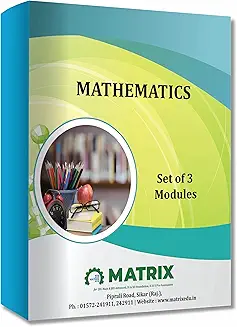
Buy the Matrix Mathematics Set of 3 modules book set to level up your JEE preparation. The Matrix modules are a great, affordable choice for JEE aspirants, as this set includes everything a student needs to prepare for JEE 2026.
Best Books for Physics
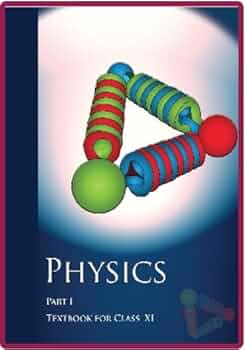
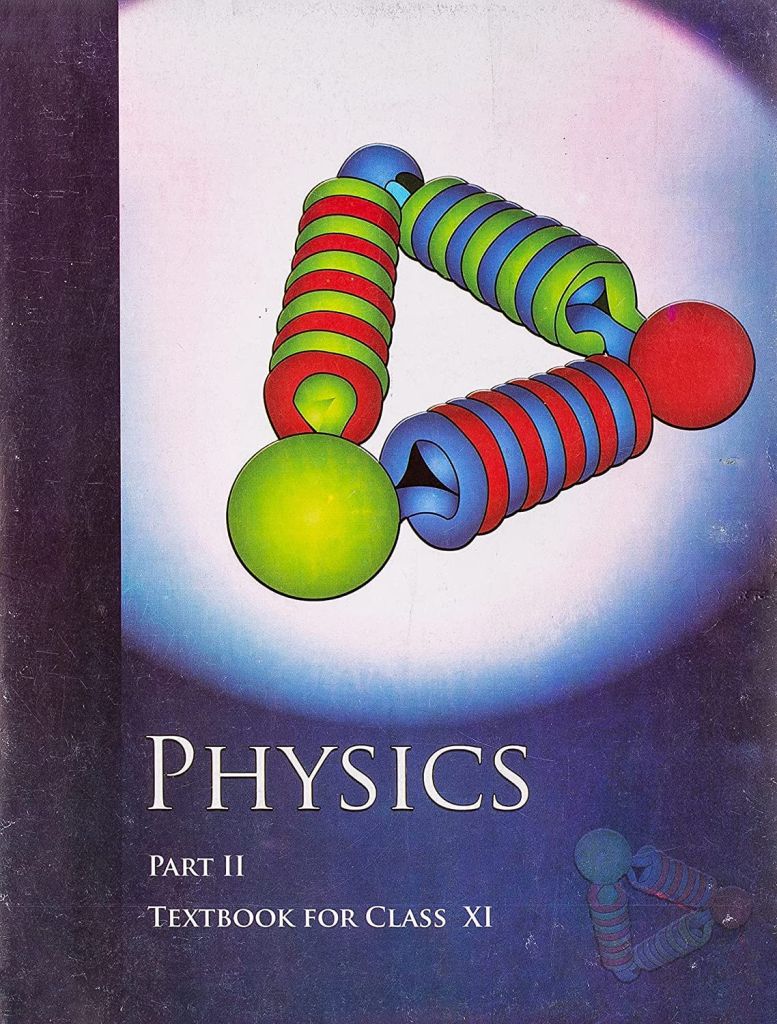
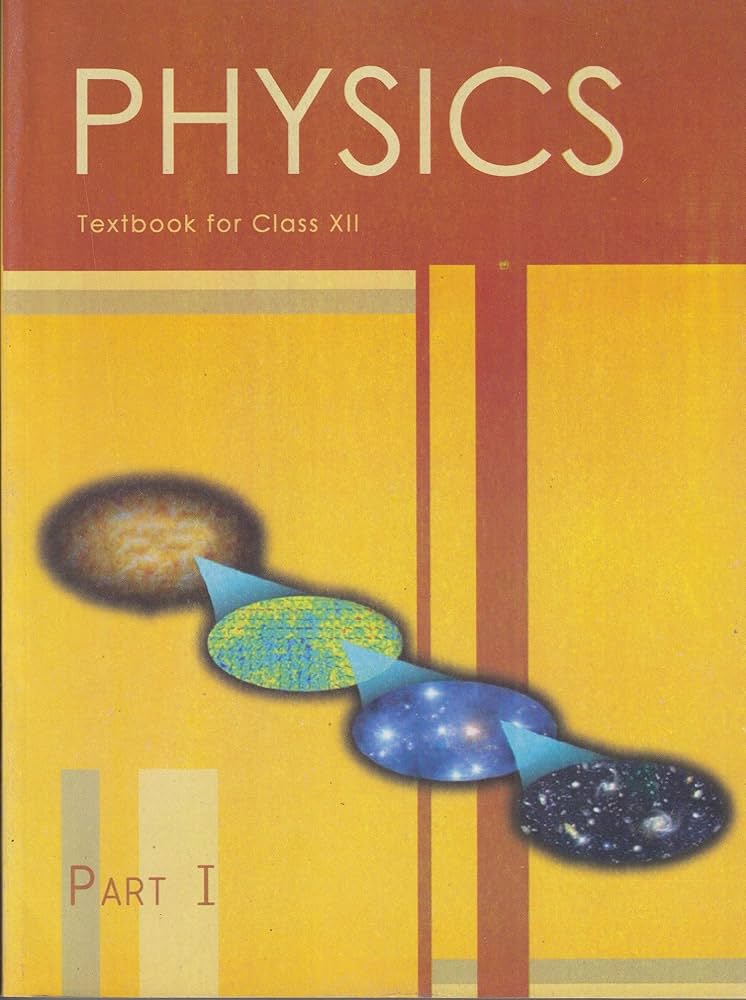
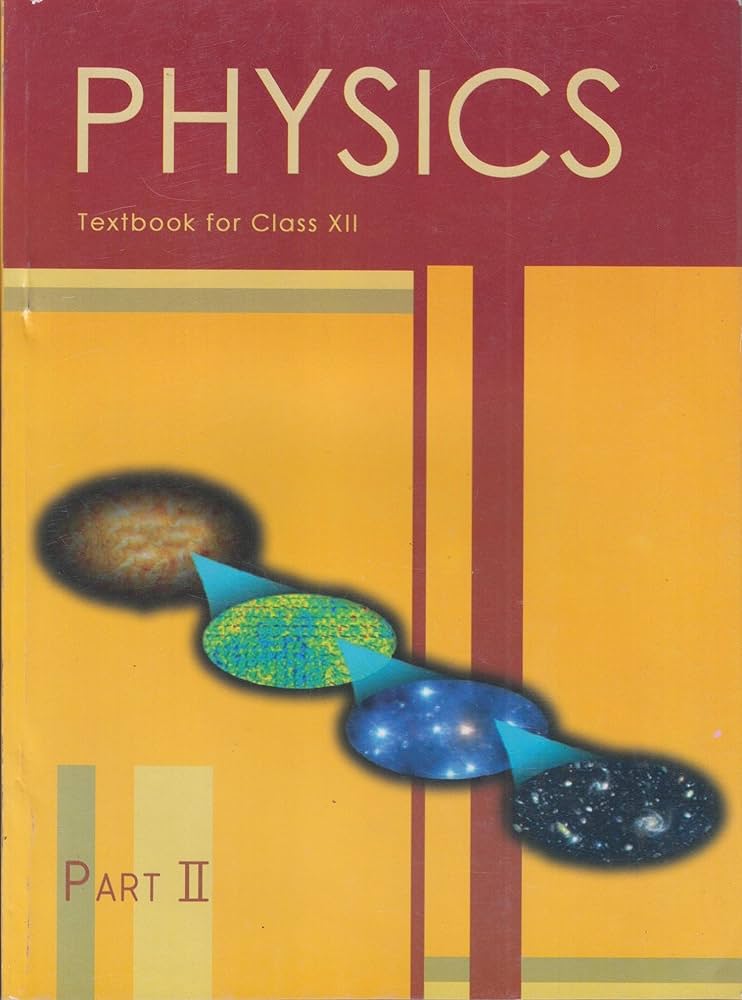
Buy the latest NCERT Class 11 physics and NCERT Class 12 physics book (2025-2026 edition).
Best Books for Mathematics
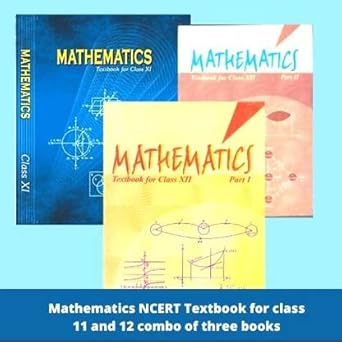
If you wish to buy the complete set of NCERT Mathematics books, here is the link to order the NCERT Maths class 11 and 12 book set.
Best Books for Chemistry for JEE Main 2026
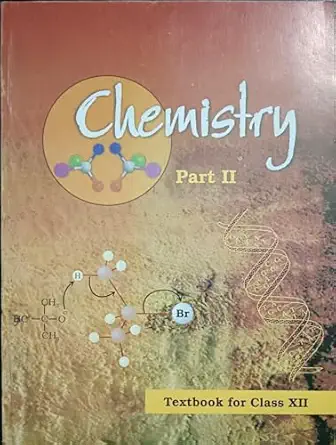
Link to purchase: NCERT Class 11 Chemistry.
Link to purchase: NCERT Class 12 Chemistry.
Common Mistakes to Avoid During JEE Main Preparation
Many students tend to lose marks due to avoidable errors that can be fixed with awareness and practice. A smart student always tries to avoid common mistakes made during the JEE Main preparation. Here are some of them:
- Ignoring NCERT: NCERT is crucial for JEE Main every year to build a strong base. Hence, study the NCERT thoroughly 3 times.
- Avoiding mock analysis: Just giving the mocks is not sufficient. Analysis will help in identifying your weak areas.
- Weak time management: Give equal attention to all three subjects. Even during the exam, do not get hung up on maths as it is lengthy.
- Studying new topics at the last minute: Avoid putting time into learning new topics. Focus on easy scoring chapters.
- Common mistakes that kill the accuracy: There are some common mistakes observed that kill the accuracy.
- Calculation errors result in a loss of −20 to −40 marks. To avoid this, write clear steps while solving and practice 50 or more numerical problems every week.
- Out of panic, many students make the mistake of misreading the question. This results in a loss of at least 15 marks.
Read More: How to avoid silly mistakes in JEE Main exam.
JEE Main 2026 Exam Overview
The JEE Main Exam is a gateway to top engineering colleges of India. It is also a qualifying eligibility exam for JEE Advanced for those who want to get into IITs. The JEE exam tests the conceptual clarity along with speed and accuracy. Before stepping into the effective strategies about JEE Main preparation, let us get an overview of the exam pattern and dates released by NTA (National Testing Agency).
JEE Main 2026 Exam Dates
The JEE Main exam is conducted twice a year, allowing students to improve their scores. NTA released the exam dates on October 29, 2025. As per the statistics, almost 70% of the top scorers improve their score and percentile in the second session attempt. The table below highlights JEE Main 2026 exam dates.
| Particulars | Session 1 | Session 2 |
| Online Registration Starts | 12 Dec 2025 | 1 Mar 2026 |
| Online Registration End | 11 Jan 2026 | 31 Mar 2026 |
| Correction Window | 15–20 Jan 2026 | 5–10 Apr 2026 |
| Admit Card Release | 20 Jan 2026 | 15 Apr 2026 |
| JEE Main 2026 Exam Dates | 21–29 Jan 2026 | 2–9 Apr 2026 |
| Answer Key Release | 2 Feb 2026 | 1 May 2026 |
| Result Declaration | 10 Feb 2026 (Estimate) | 10 May 2026 (Estimate) |
JEE Main 2026 Exam Pattern (Latest)
Below is the table featuring the latest JEE Main 2026 exam pattern. The paper will have 75 compulsory questions with a total marks being 300.
| Particulars | Paper 1 (B.E./B.Tech) | Paper 2A (B.Arch) | Paper 2B (B.Plan) |
| Mode of Examination | Computer-Based Test (CBT) | Computer-Based Test (CBT) | Computer-Based Test (CBT) |
| Duration of Exam | 3 hours (4 hours for PwD candidates) | 3 hours (180 minutes) | 3 hours (180 minutes) |
| Subjects | Physics, Chemistry, Mathematics | Mathematics, Aptitude, Drawing | Mathematics, Aptitude, Planning |
| Total Number of Questions | 75 | 77 | 100 |
| Section-Wise Question Pattern | Each subject: Section A (20 MCQs) + Section B (5 Numerical Value Questions) | Mathematics (25 MCQs), Aptitude (50 MCQs), Drawing (2 Questions) | Mathematics (25 MCQs), Aptitude (50 MCQs), Planning (25 Questions) |
| Type of Questions | MCQs & Numerical Value Questions | MCQs & Drawing-Based Questions | MCQs, Numerical & Planning-Based Questions |
| Total Marks | 300 Marks | 400 Marks | 400 Marks |
| Marking Scheme | +4 for correct answer, −1 for incorrect MCQs, 0 for unattempted | +4 for correct answer, −1 for incorrect, 0 for unattempted | +4 for correct answer, −1 for incorrect, 0 for unattempted |
Conclusion
A common misconception is that only toppers can crack the JEE Main. But with the right guidance, any student can clear the exam and achieve admissions in their dream colleges. Therefore, do you want to score 99+ percentile? No matter what preparation stage you are in, it is time to gear up and follow a study plan consistently. Consistency, smart work, and discipline beat the competition.
FAQs on JEE Main Preparation
Some toppers’ tips for JEE Main preparation are:
1. Master NCERT.
2. Focus on high-weightage chapters.
3. Importance should be given to PYQs.
4. Give full-length mock tests regularly.
5. The attempt strategy should be based on accuracy and not on the number of attempts.
NCERT is sufficient for the JEE Main preparation. NCERT books help in building concepts and covering the full syllabus. Along with NCERT, use coaching modules for better practice and higher accuracy.
It is advised to study for a focused 6-8 hours daily. This is the ideal study time. Divide the study hours into theory, practice, and revision. Quality study with revision and practice matters more than long, unproductive study hours.
To answer the question of how to prepare for JEE Main from class 11, start with the fundamentals. Stick to NCERT books for Physics, Chemistry, and Mathematics. Follow the class 11 study plan discussed in the blog, which has an effective study strategy.
The high-weightage chapters include Modern Physics, Current Electricity, Thermodynamics, Coordination Compounds, Calculus, and Matrices & Determinants, based on previous year trends.
The ideal time to begin topic-wise mock tests is as early as possible once the syllabus is completed. In the last 3 months, practice all the mocks and PYQs again with 2-3 mocks per week.
To score 99 percentile in JEE Main, focus on an attempt strategy and increasing accuracy in the attempts. Revise daily to retain the formulas and reactions. Read the NCERT books 3 times thoroughly. And do mock analysis every time you give full-length mocks.
Yes, it is possible to crack JEE Main without coaching. But many toppers prefer coaching for many reasons. Coaching helps with structured study materials and practice questions daily. Mentors are available to clear doubts. If you wish to study for JEE Main on your own, rely on NCERT and purchase a JEE Main coaching material. Buy test series and mocks with self-practice.
Previous year questions (PYQs) are important and are a key factor in scoring 99 percentile. PYQs help in understanding the exam pattern, type of questions, and help with building an effective exam strategy. Practice PYQs regularly to improve speed, accuracy, and confidence, making them an essential part of any successful JEE Main preparation strategy.
In the last month before JEE Main, students should focus entirely on revision, mock tests, and error correction. Also, avoid learning any new topics in the last month. Revise NCERT concepts, important formulas, and short notes daily. Attempt full-length mock tests under exam-like conditions.