

How to Get Admission in IIT? Complete Admission Process & Eligibility Criteria
If you want to get into IITs, you need to be in the top 2.5 lakh JEE Main qualifying candidates and clear the JEE Advanced exam. IIT is a dream for every engineering aspirant in India. The competition for IIT is fierce, and so is the admission process. There are 23 IITs in India, and the selection rate based on the statistics is only 1-2%. And each IIT has its own eligibility criteria and cutoff that students must clear to get admission.
This blog provides a detailed breakdown on how to get admission to IIT based on factual research done by top academic experts at Matrix JEE Academy. The key topics covered are IIT eligibility criteria, cutoff for IITs, JoSAA counselling, and IIT reservation (49.5% of seats are reserved for OBC, SC, ST and EWS). The blog will also shed light on the supernumerary female reservation criteria, which is 20%. Also, you will find out the top alternate college options apart from IIT if you don’t get admissions into IIT even after being eligible.
What is the Eligibility Criteria for IIT Admission?
Are you aspiring for IIT but confused about the eligibility criteria norms? To get admission in IITs, students will have to meet specific eligibility criteria set by the institute. Qualifying JEE Main and JEE Advanced exams is not the only eligibility criteria for IIT. Based on the official JEE Advanced and JEE Main eligibility criteria, here is the complete IIT Admission eligibility criteria. Students will have to fulfill each one of the criteria mentioned below to be eligible for IITs:
- Class 12 subjects eligibility criteria: Students must have Physics, Chemistry, and Maths in their class 12 as they are compulsory subjects as per the IIT admission criteria.
- Year of passing class 12 eligibility criteria: Students are eligible for IIT admissions only if they passed class 10+2 in 2025 or are appearing for the first time in 2026. Hence, students who appeared for the 10+2 examination in 2024 or before are not eligible for IIT admissions 2026. If a student who is appearing for class 12 in 2026 and has their results withheld for some reason, they will not be eligible for IIT.
- Class 12 passing marks criteria: The minimum passing marks criteria in the 10+2 examination is 75% aggregate marks for the General and OBC category and 65% for SC/ST/PwD.
- Age limit criteria: IIT has set an age limit criteria for admissions. The candidates must be born on or after October 1, 2001. There is a 5-year relaxation period given for SC/ST/PwD, which means they should be born on or after October 1, 1996.
- JEE Main Qualification Criteria: Students have to be in the top 2.5 lakh candidates to clear the JEE Main exam and qualify for JEE Advanced exam. The JEE Advanced exam is the qualifying exam for IIT admissions.
- JEE Advanced Criteria: Students need to clear the JEE Advanced exam cutoff to be eligible for admission into IITs.
- Attempt Limit Eligibility Criteria: Students can give the JEE Advanced exam only two times in two consecutive years. This means that a candidate has only two chances to qualify for IIT admissions and will not be eligible after these two attempts.
- Previous IIT admission eligibility criteria: If a candidate has taken admission in IIT before and, due to some reasons, they decided to drop out of the IIT program or their admission was cancelled, then they are not eligible to get admission into IITs again. Here are some exceptions as per the official JEE Advanced eligibility criteria:
- Students who have been admitted to the IIT preparatory course 2025 for the first time are eligible for JEE Advanced 2026 and IIT admissions 2026.
- Students who were allocated a seat through JoSAA counselling but did not report online or to the reporting centre, withdrew their seat before the last round or their seat was cancelled before the last round of seat allotment, are eligible to appear for the JEE Advanced exam 2026, given that they meet all the other eligibility conditions. Check the official JEE Advanced 2026 eligibility criteria for more details.
IIT Admission Process for Undergraduate Courses in 2026
Once you are sure that you meet all the IIT eligibility criteria, the next step is to understand the IIT Admission process. It is always safer to be aware of all the latest information about IIT admissions to avoid any stress later. To get into IITs, qualifying for the exams and getting top ranks matter. Here is a complete IIT Admission process in the right sequence for a better idea:

JEE Main Exam
The first qualifying step towards IIT admissions is clearing the JEE Main exam. The JEE Main exam is conducted by NTA twice a year, allowing students to improve their scores. The JEE Main 2026 exam will be conducted in two sessions – January and April. The JEE Main 2026 Session 1 exam dates are January 21 to January 29, 2026, and exam dates for JEE Main 2026 Session 2 are April 2 to April 9, 2026 for Session 2. The exam is conducted for 5 days in 10 shifts. And the scores are calculated through the JEE Main normalisation process. But how does NTA do the normalisation of JEE Main scores? Find out the complete process of NTA about how to calculate percentile in JEE Main.
Therefore, if you want to get admission in IIT, the first step is to clear the JEE Main exam and be in the top 2.5 lakh qualifying candidates. This will make a student eligible for the next step of the IIT admission process, which is the JEE Advanced exam. The JEE Main 2026 Session 1 has been concluded. Check the JEE Main 2026 cutoff to see if your score makes you qualify for JEE Advanced or not.
JEE Advanced Exam
As we know, the JEE Main exam is conducted in two sessions. To be eligible to appear for the JEE Advanced exam, students will have to clear any one of the JEE Main sessions. The JEE Advanced 2026 exam date has been released and will be held on May 17, 2026. The JEE Advanced 2026 exam will be conducted by IIT Roorkee this year. The conducting body for JEE Advanced is decided on a yearly rotational basis among seven zonal IITs: Bombay, Delhi, Guwahati, Kanpur, Kharagpur, Madras, or Roorkee. Students with top AIR will be eligible for admission into IITs.
JoSAA Counselling
JoSAA counselling is the next stage for IIT admissions. Students who have qualified for both JEE Main and Advanced can sit for JoSAA counselling after the JEE Advanced results are out. The estimated time period for JoSAA counselling 2026 is the first week of June 2026. Candidates can apply for IITs as well as other colleges like NITs, IIITs, and GFTIs. In this stage, students will have to fill out the colleges they want to apply to, along with branch options. Students will also have to submit all required documents, including marksheets and scorecards.
Fee Payment
In the JoSAA counselling rounds, students will have to pay a fee to accept the IIT college allotted in a round. The JoSAA counselling fee to secure a seat in any of the IITs is 35,000 for the General/OBC-NCL category and 15,000 for the SC/ST/PwD category. This is the SAF (Seat Acceptance Fee) for IITs. After paying the fee, students can choose either the freeze, float, or slide option. If a student fails to make payment, they will lose the seat. There are two types of fee payment:
SAF (Seat Acceptance Fee) – This fee is made to secure the seat and move to other rounds. Students can later withdraw their seats in the final round after making a decision. The fee will be refunded after deducting 5000 rupees. This applies to all colleges, including IITs.
PAF (Partial Admission Fee) – The PAF fee is a mandatory fee that needs to be paid to confirm the seat in the last round for the IIT college finalised. The PAF fee is around 45,000 for General/EWS/OBC and 20,000 for SC/ST/PwD to secure the seat. Failing to pay the PAF fee will result in the cancellation of the seat.
Seat Allotment Process
Once the college preference form is filled out, students will be allotted seats based on their JEE Main and JEE Advanced ranks, category, number of seats, and the college preference order. There will be 6 JoSAA counselling rounds for the seat allotment process. At this stage, students can choose freeze, float, or slide options for every college allotted in 6 rounds.
- Freeze: Accept the allotted college seat and do not wish to participate in further rounds.
- Float: Accept the allotted seat, but also participate in the further rounds.
- Slide: Accept the allotted college seat, but want a better engineering branch in the same college or institute.
Final Admission Step to IIT
Once the student has paid the PAF for the IIT colleges, the next step involves reporting to the allotted IIT college. Students are required to report to the IIT college physically and submit the required documents. Once the verification is completed, students will be requested to make the remaining fee payment and will then be admitted to the college.
IIT Admissions Cutoff Trends
Now that we have understood that students need to clear the JEE Advanced exam to be eligible for IIT admissions through JoSAA counselling. The common query arises – what is the JEE Advanced cutoff for IITs? Let us find out the JEE Advanced cutoff 2025 to answer this question. Once the JEE Advanced results are out, different rank lists are released. The main rank list is called the CRL (Common Rank List), and the other is a category-wise rank list. A separate list is released for every category, including OBC-NCL, General, SC, ST, and PwD. Below are the opening and closing ranks of JEE Advanced 2025 for all IITs.
JEE Advanced Cutoff for IIT Admissions (2025)
Below is a table depicting the JEE Advanced 2025 closing and opening ranks of all IITs. Students can refer to this to get an idea of which rank to target for the IIT branch.
| IIT | JEE Advanced 2025 Opening Rank | JEE Advanced 2025 Closing Rank |
| IIT Bombay | 1 | 66 |
| IIT Delhi | 24 | 126 |
| IIT Madras | 79 | 171 |
| IIT Kanpur | 147 | 271 |
| IIT Kharagpur | 238 | 466 |
| IIT Roorkee | 275 | 592 |
| IIT Hyderabad | 339 | 673 |
| IIT Guwahati | 504 | 792 |
| IIT (BHU) Varanasi | 747 | 1489 |
| IIT Indore | 952 | 1775 |
| IIT Gandhinagar | 905 | 2020 |
| IIT Ropar | 1680 | 2512 |
| IIT Mandi | 2096 | 3123 |
| IIT Patna | 1954 | 3377 |
| IIT (ISM) Dhanbad | 2143 | 3585 |
| IIT Bhubaneswar | 2344 | 4162 |
| IIT Tirupati | 1916 | 5034 |
| IIT Goa | 4256 | 6242 |
| IIT Palakkad | 4530 | 6454 |
| IIT Jammu | 4704 | 6651 |
| IIT Dharwad | 4742 | 7208 |
| IIT Bhilai | 4462 | 7382 |
| IIT Jodhpur | 2269 | 2918 |
JEE Advanced Cutoff for IIT Admissions (Category-Wise)
Also, check the closing and opening ranks for all categories for JEE Advanced 2025.
| Category | Opening Rank | Closing Rank |
| General (OPEN) | 1 | 16,000 |
| EWS | 50 | 3,500 |
| OBC-NCL | 30 | 8,500 |
| SC | 15 | 4,500 |
| ST | 10 | 2,500 |
JEE Advanced Cutoff for IIT 2026 (Expected)
At Matrix JEE Academy, our team makes sure that all students are informed of the necessary information related to admissions into IITs. And the most asked query among students is what the JEE Advanced cut-off is for IITs? Based on the past year’s trends, our academic experts have estimated the JEE Advanced cut-off marks and rank for IIT 2026.
To get admission into IITs through the JEE Advanced exam, it depends on some key factors. Admission in IITs depends on AIR, IIT branch, and specialisation. Check out the expected JEE Advanced 2026 cutoff for IITs below.
| JEE Advanced Marks (out of 360) | Expected Rank (AIR) | Likely IIT & Branch Options |
| 300+ | 1 – 50 | IIT Bombay, IIT Delhi, IIT Madras – CSE |
| 280 – 300 | 50 – 200 | IIT Kanpur, IIT Kharagpur – CSE IIT Bombay / IIT Delhi – Electrical Engineering. |
| 250 – 280 | 200 – 700 | IIT Kanpur / IIT Kharagpur – Electrical Engineering. IIT Bombay / IIT Delhi – Mechanical Engineering. |
| 220 – 250 | 700 – 1,500 | IIT Kanpur / IIT Kharagpur – Mechanical Engineering. IIT Bombay / IIT Delhi – Civil Engineering. |
| 190 – 220 | 1,500 – 3,000 | IIT Kanpur / IIT Kharagpur – Civil Engineering. IIT Roorkee, IIT Guwahati – Electrical / Mechanical. |
| 160 – 190 | 3,000 – 6,000 | IIT Roorkee, IIT Guwahati – Mechanical / Civil. IIT Hyderabad, IIT BHU – Electrical. |
| 130 – 160 | 6,000 – 10,000 | IIT Hyderabad – Core branches (Mechanical, Civil, Chemical, Metallurgy) IIT BHU IIT Indore |
| 100 – 130 | 10,000 – 15,000 | IIT Jodhpur, IIT Patna – Lower-demand branches (Production, Biotechnology, Metallurgy) |
| 70 – 100 | 15,000 – 25,000 | Metallurgy, Environmental, or Dual Degree programs at newer IITs |
| < 70 | No Rank / Not Qualified | Not eligible for IIT admission |
Matrix Expert Insight: A safe JEE Advanced score for IIT admission is 150-180 marks.
Total Number of Seats in IIT 2026
For the year 2026, it is expected that there will be a total of 17,000 seats available in IITs. As per the latest updates, 1300 new seats have been added for the 2026 IIT admission process. Based on the past year, IIT seat allocation in JoSAA counselling, here is an estimated total number of seats in IIT 2026:
| IIT | Total Seats (Approx) |
| IIT Bhubaneswar | 500 – 550 |
| IIT Bombay | 1,350 – 1,400 |
| IIT Mandi | 400 – 450 |
| IIT Delhi | 1,200 – 1,300 |
| IIT Indore | 500 – 600 |
| IIT Kharagpur | 1,600 – 1,700 |
| IIT Hyderabad | 550 – 600 |
| IIT Jodhpur | 600 – 650 |
| IIT Kanpur | 1,100 – 1,200 |
| IIT Madras | 1,200 – 1,300 |
| IIT Gandhinagar | 400 – 450 |
| IIT Patna | 550 – 600 |
| IIT Roorkee | 1,300 – 1,400 |
| IIT Ropar | 400 – 450 |
| IIT Guwahati | 1,000 – 1,100 |
| IIT Bhilai | 300 – 350 |
| IIT Goa | 200 – 250 |
| IIT Palakkad | 400 – 450 |
| IIT Tirupati | 450 – 500 |
| IIT Dhanbad | 1,000 – 1,100 |
| IIT Jammu | 300 – 350 |
| IIT Dharwad | 300 – 350 |
| IIT (BHU) Varanasi | 1,400 – 1,500 |
IIT Reservation Criteria 2026
IITs have a reservation criteria system. 49.5% of seats for IITs are reserved for categories – OBC-NCL, SC, ST, EWS (GEN). There is a reservation for PwD candidates also, which is a vertical reservation, which means it is applicable across all categories. After the JEE Advanced results, two rank lists are released. One is the CRL (Common Rank List) and the category rank list. Students who come under the reservation category must note to keep their caste certificates ready and updated for this year.
| Category | Reservation (%) | Applicable To | Key Notes |
| General (UR) | No fixed quota (remaining ~50.5%) | All candidates | Open category; highest competition. |
| OBC-NCL | 27% | Non-creamy layer OBC candidates | Must have a valid OBC NCL certificate. |
| EWS | 10% | Economically Weaker Section (General category) | Income ≤ ₹8 lakh/year + asset criteria |
| SC | 15% | Scheduled Castes | Caste certificate required |
| ST | 7.5% | Scheduled Tribes | Caste certificate required |
| PwD | 5% (vertical) | Across all categories | Applies within each category (UR/OBC/SC/ST/EWS) |
IIT Supernumerary Reservation Criteria
To promote a higher gender ratio and diversity in IITs, a supernumerary reservation criterion has been introduced only for girls. The reservation criteria imply that an additional 20% seats are added in the IIT seat matrix. Female candidates are considered in the gender neutral pool, which includes the general IIT seat matrix. And females are also considered for the female-only pool, which are additional 20% seats. This is to ensure that a minimum of 20% female candidates are present in IITs.
No separate application is required to apply for the female quota. It will happen through JoSAA counselling itself.
Alternate College Options Other Than IIT
Every engineering aspirant dreams of getting into IIT. Given the number of students and total seats in IITs, the level of competition is tough. If you are aiming for IIT but could not get into one, there are still alternative college options that come under the top engineering colleges of India. Check out the list below of top engineering college options other than IIT in India:
NITs – National Institute of Technology
After IITs, the most sought-after option by JEE aspirants is NITs. Top NITs, including NIT Trichy, NIT Surathkal, and NIT Warangal. The reason behind NITs being popular after IITs is their top placements at par with IITs, top-tier faculty, and reputation.
Almost 441 students of Matrix Academy, Sikar, joined top NITs from the 2024-2025 batch. If you missed the opportunity at IIT, there is nothing to worry about. Students can still get into NITs by clearing the cutoff through the JEE Main exam. There is no need to give the JEE Advanced exam to get into NITs. The JEE Main 2026 cut off for NITs is between 99-99.7 percentile.
IIITs – Indian Institutes of Information Technology
IIITs are popular for their IT & Computer Science-focused undergraduate courses. There are 25 IIITs all over India. The college is integrated with excellent faculty providing high placements to students in the competitive job market. The top 3 IIITs in India are IIIT Hyderabad, IIIT Allahabad, and IIITM Gwalior.
Students can get admission into IIIT through the JEE Main exam. The cut-off for IIIT colleges for JEE Main 2026 is 99+ percentile for the top IIITs, including IIIT Bangalore. For the new IIITs, the cut-off is above 94%ile. According to our experts, this college is best suited for students who want to build a career in AI and robotics.
GFTIs – Government Funded Technical Institutions
Government-funded technical institutions are engineering colleges supported by the central or state government. There are over 30 GFTIs in India providing B.Tech in various specializations. Students will have to clear the JEE Main cut-off and sit for JoSAA counselling to get admissions into GFTIs. The top GFTIs are:
- Birla Institute of Technology, Ranchi.
- Assam University, Silchar
- Gurukula Kangli Vishwavidyalaya, Haridwar.
- Central University of Rajasthan.
Top Private Engineering Colleges
Apart from IITs, NITs, GFTIs, and IIITs, students can target the top private engineering colleges through JoSAA counselling. Here is a list of the top private engineering colleges that students can apply to:
- BITS Pilani, Rajasthan
- VIT Vellore
- MIT – Manipal Institute of Technology
- SRM Institute of Science and Technology
These are the college options that JEE aspirants can target if they do not qualify for IIT.
Dropping a year to repeat JEE is not a viable option for everyone. And students can get into top engineering colleges through JoSAA counselling by clearing the cutoff for the colleges they are targeting. Matrix JEE experts advise aspirants to make a list of colleges they want to target once the JEE Main answer key is out. Using the answer key, candidates can calculate their score with the JEE Main score calculator tool. And also get an estimated rank using the JEE Main rank predictor tool.
Number of IIT Admissions from Matrix JEE Academy (Year-Wise)
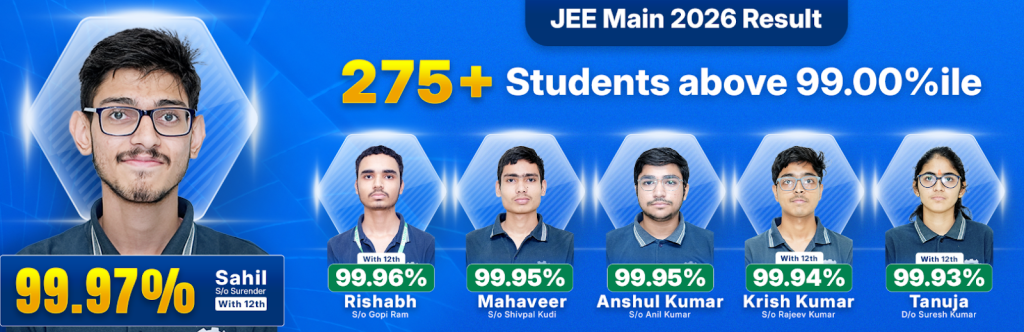
The JEE Main 2026 Session 1 exam was concluded on 29th January, 2026, and the results were declared on February 16, 2026. Students from Matrix JEE Academy have performed exceptionally this year as well. 275+ students scored above 99 percentile this year. Sahil topped the exam with a 99.97%ile JEE Main score.
Matrix JEE Academy, Sikar, has been delivering top JEE rankers and toppers every year since 2014. Every year, students join Matrix JEE coaching, dreaming of sitting in the top IITs of India. With persistence, consistency, and mentor guidance, hundreds of Matrix JEE Academy students fulfil their dream every year. The table below is an overview of the Matrix students’ IIT success insights from 2020 to 2025.
| Batch Year | Total Students Selected in IITs | IIT Madras | IIT Delhi | IIT Bombay | IIT Kanpur | IIT Kharagpur |
| 2019-2020 | 269 | 8 | 36 | 32 | 25 | 42 |
| 2020-2021 | 168 | 11 | 24 | 18 | 20 | 21 |
| 2021-2022 | 252 | 12 | 36 | 22 | 30 | 34 |
| 2022-2023 | 355 | 4 | 48 | 39 | 27 | 23 |
| 2023-2024 | 517 | 7 | 42 | 48 | 60 | 58 |
| 2024-2025 | 688 | 7 | 51 | 42 | 60 | 62 |
This exceptional performance of Matrix students is a result of a strategic study plan for JEE. To crack IIT, it is advised that students join the best IIT JEE coaching in India and level up their preparation. Also, check the Matrix student success stories and their journey to IITs.
Conclusion
Getting into IITs is tough but not impossible. With a strategic study approach and awareness about the admission process, the journey to IIT can be made possible. At Matrix JEE Academy, our faculty provides guidance and mentorship at each stage of the IIT admission process. Every year, more than 400 students from Matrix take admission into the top IITs with our support. We do not just prepare for the JEE Main and JEE Advanced exams, but also for the entire admission process, including the JoSAA counselling.
To answer the question of how to get admission in IIT is to know how to prepare for JEE Advanced and JEE Main strategically, clear all the qualifying exams, and make informed college decisions during the counselling process. The JEE Advanced 2026 exam is approaching, and students can prepare with the safe target of 150+ marks to secure admission to IITs and rank between 8000 and 10,000.
FAQs
To get admissions into IIT, general category students require a minimum CRL of 8,000 to 10,000. To get admission into the top 10 IIT colleges in India and top branches, it is safe to target a rank between 500 and 1000.
Yes, 150 marks or above in JEE Advanced is considered a safe score to get admission into one of the 23 IITs of India. But 150 marks alone will not guarantee admission in the desired IIT and branch, like CSE.
To be eligible to get admission into IIT, a candidate must have cleared the JEE Main exam and be in the top 2.5 lakh qualified students. The next step is to clear the JEE Advanced exam. Candidates must have physics, chemistry, and maths in class 10+2 with a minimum aggregate mark of 75%.
To get admission in IIT, students will have to clear the JEE Main and Advanced exams and secure a top rank. Students who have cleared the JEE Advanced exam can sit for the JoSAA counselling process. Once the fee payment is done along with other admission formalities, a student will be considered an IITian.
To get into IIT for the B.Tech program, the only way is to clear the JEE Main and JEE Advanced exams. There is no other way to get admission in IIT for undergraduate engineering courses.
A candidate is allowed to give only 2 attempts in two consecutive years for the JEE Advanced exam.